How do taxes work for Uber Eats couriers?
Uber Eats couriers are independent contractors: Uber withholds no tax, and you report your delivery income and expenses on Schedule C and pay self-employment tax. Uber issues a Form 1099-K for gross trip and order earnings (federal threshold $20,000 and 200 transactions; some states are lower) and a Form 1099-NEC for other payments such as promotions or referrals. Your biggest deduction is usually business mileage: 72.5 cents per mile for January–June 2026 and 76 cents per mile for July–December 2026.
Which forms Uber sends
| Document | What it covers | Threshold |
|---|---|---|
| Form 1099-K | Gross trip/order earnings: what customers paid for your deliveries, including tips | $20,000 and 200 transactions federally; lower in some states |
| Form 1099-NEC | Payments not from customers, such as promotions or referral bonuses | $600 for 2025 payments; $2,000 for payments made in 2026 |
| Annual tax summary | Earnings breakdown, online miles and possible deductible expenses | Every courier; not an official tax form |
Uber says annual tax documents are available by January 31 in the Driver app and on the driver web portal. If you are under the threshold, you can opt in to receive forms by updating your W-9 in the app; Uber says to opt in by December 31 if you want a mailed copy.
No form does not mean no tax. All Uber Eats income is taxable whether or not you receive a 1099.
Gross is not profit
Uber says the gross amounts on its tax documents can include fees that were deducted before your deposits, and that some of those fees may be deductible. Start from the gross figures, then subtract your business expenses on Schedule C. Tax is due on the profit.
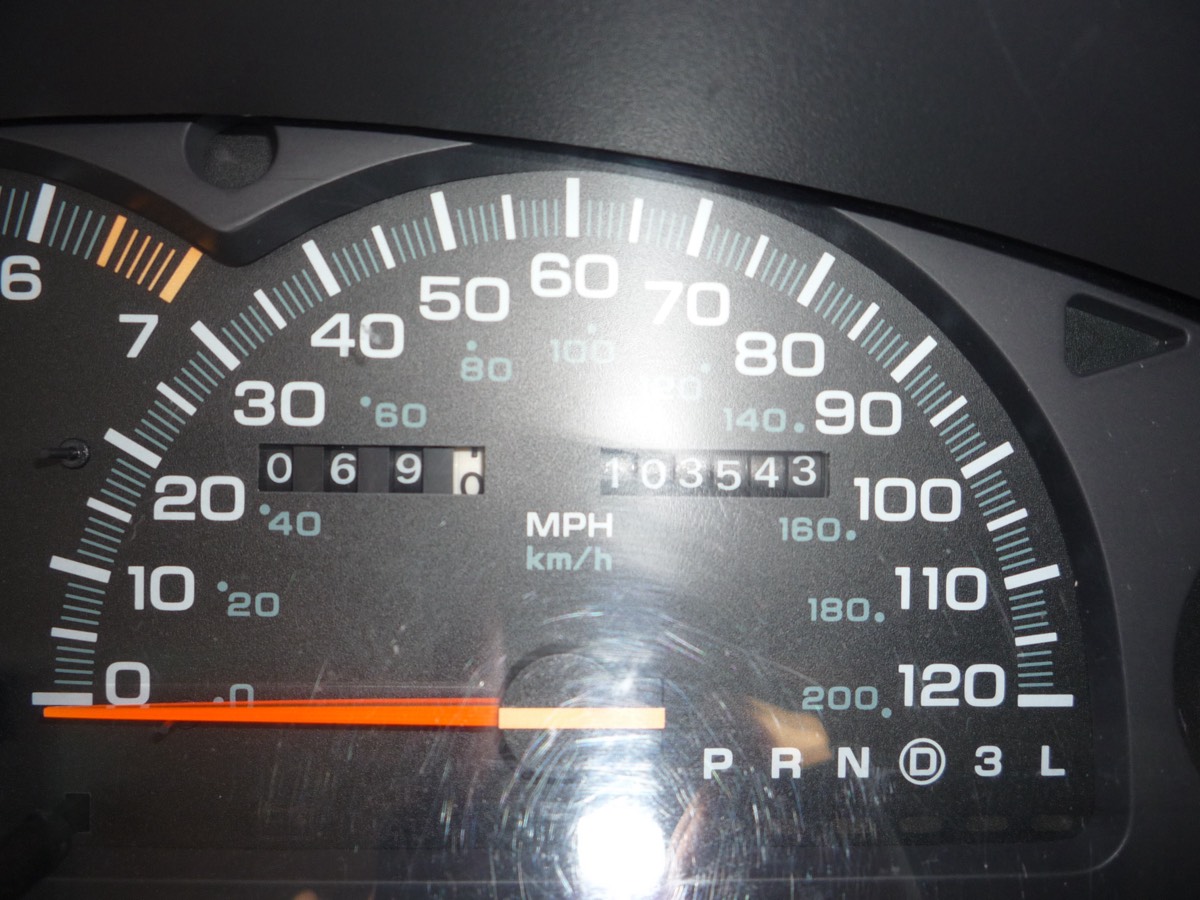
Mileage: your biggest deduction
2026 IRS business rate: 72.5¢ per mile for miles driven January 1 to June 30, and 76¢ per mile for July 1 to December 31 (IRS Announcement 2026-11). Your log needs dates so you can split the year.
- Restaurant to customer, and customer to the next pickup or busy zone: generally business miles.
- Home to your first pickup and back: depends on your situation (commuting is normally personal). Ask a tax professional and apply one rule consistently.
- Personal errands with the app on: not business miles.
Uber's annual tax summary lists "online miles", which Uber says include miles driven while waiting for a trip, driving to pickup and on trips. Use it as a cross-check, but keep your own dated log; the IRS asks for records made at or near the time. The same rules are explained in detail in which miles you can deduct.
Bike and e-bike couriers cannot use the standard mileage rate, which is for cars, vans, pickups and panel trucks. Track actual costs instead: e-bike, battery, repairs, phone, bag and gear.
Worked example (illustrative)
- Gross Uber Eats earnings for 2026 (fares and tips): $24,000
- Business miles: 6,000 in January–June × $0.725 = $4,350; 7,000 in July–December × $0.76 = $5,320
- Phone share, bag, parking: $600
- Net profit on Schedule C: $24,000 − $10,270 = $13,730
Self-employment tax (15.3% on 92.35% of net profit) is about $1,940 on that profit, plus income tax depending on your other income, deductions and credits.
Watch: the 76¢ mid-year mileage rate
In a Show Me The Money Club clip on The Rideshare Guy channel, Sergio and Chris explain the IRS increase to 76 cents per mile from July 1, 2026 (up from 72.5 cents), why tracking every qualifying business mile matters, and why drivers should compare the standard mileage method with actual vehicle expenses before filing.
 6:18
Other things to plan for
- Quarterly estimates: if you expect to owe $1,000 or more, pay estimated taxes during the year. See quarterly taxes for gig workers.
- No tax on tips: qualified tips may be deductible for 2025 through 2028 (up to $25,000). See the no-tax-on-tips deduction.
- Prop 22 mileage pay in California is income, separate from the IRS mileage deduction.
- Several apps: combine all delivery income and expenses on one Schedule C if it is the same business, and keep per-app records. See common deductions and how 1099 thresholds work.
Frequently asked questions
Does Uber Eats send a 1099?
Yes, if you meet the thresholds. Uber issues a 1099-K for gross trip and order earnings ($20,000 and 200 transactions federally, lower in some states) and a 1099-NEC for other payments such as promotions. You can opt in to forms below the threshold by updating your W-9.
Do I have to pay taxes on Uber Eats if I made under $20,000?
Yes. All Uber Eats income is taxable whether or not you receive a 1099. The threshold only decides whether Uber has to send a form.
What is the 2026 mileage rate for Uber Eats couriers?
72.5 cents per mile for miles driven January 1 to June 30, 2026, and 76 cents per mile from July 1 to December 31, 2026, after the IRS mid-year increase.
Are Uber Eats online miles deductible?
Uber's tax summary includes miles driven while waiting for trips. Whether all of them are deductible depends on the purpose of each drive. Keep your own dated log and ask a tax professional.
Can bike couriers deduct mileage?
Not at the standard mileage rate, which applies to cars and light trucks. Bike and e-bike couriers can deduct actual business costs such as repairs, batteries and gear.
Go deeper. Chapter 11 of the Uber Eats Courier Playbook covers taxes, mileage and records in full, including a weekly record-keeping routine. Get the Uber Eats e-book or read chapters 1–2 free.
Related guides
- How do tips work for Uber Eats couriers in 2026?
- How does Uber Eats pay delivery people in 2026?
- How do you appeal an Uber Eats deactivation?
Sources
- Uber: Tax information for drivers and couriers
- IRS: Understanding your Form 1099-K
- IRS: About Form 1099-NEC
- IRS: Standard mileage rates (2026 rates, including the July 1 change)
- IRS Internal Revenue Bulletin 2026-29 (Announcement 2026-11)
- IRS Publication 463: Travel, Gift, and Car Expenses
- IRS: Self-employment tax
- IRS: One Big Beautiful Bill provisions